Understand
Translate business requirements and stakeholder needs into clear user journeys, interface requirements and priorities.
A connected digital ecosystem spanning the public website, student experience and administration platform.
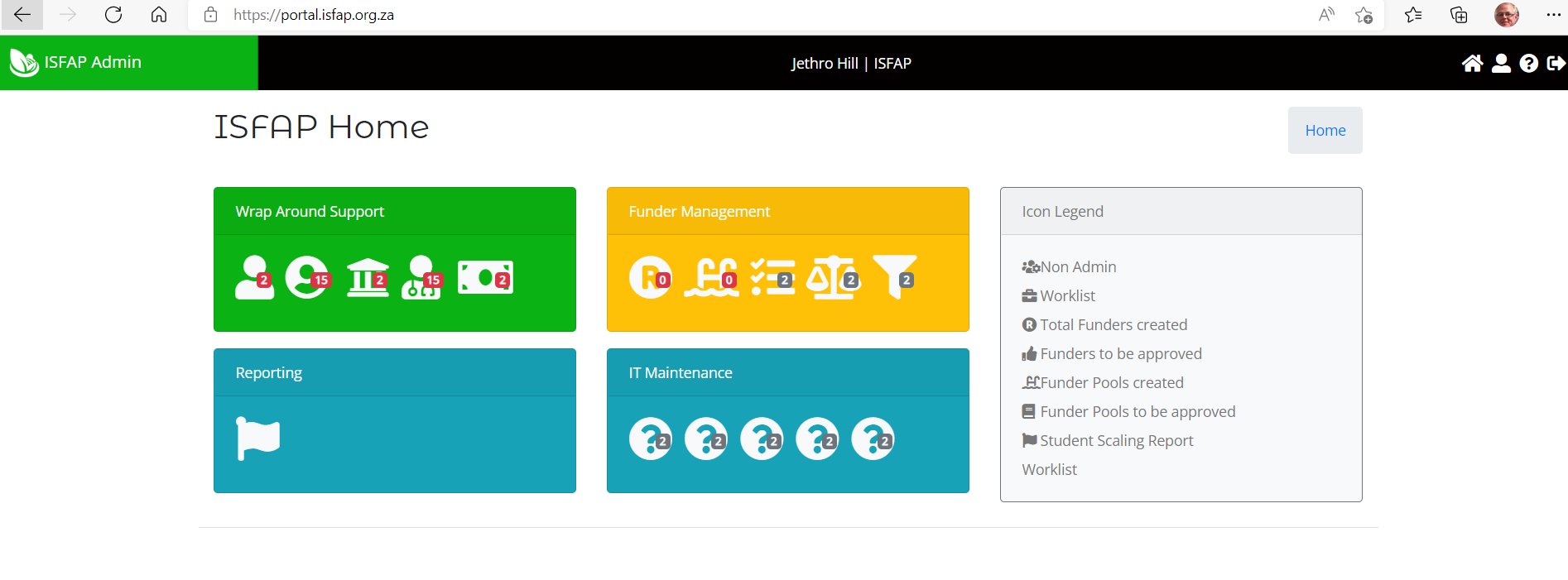
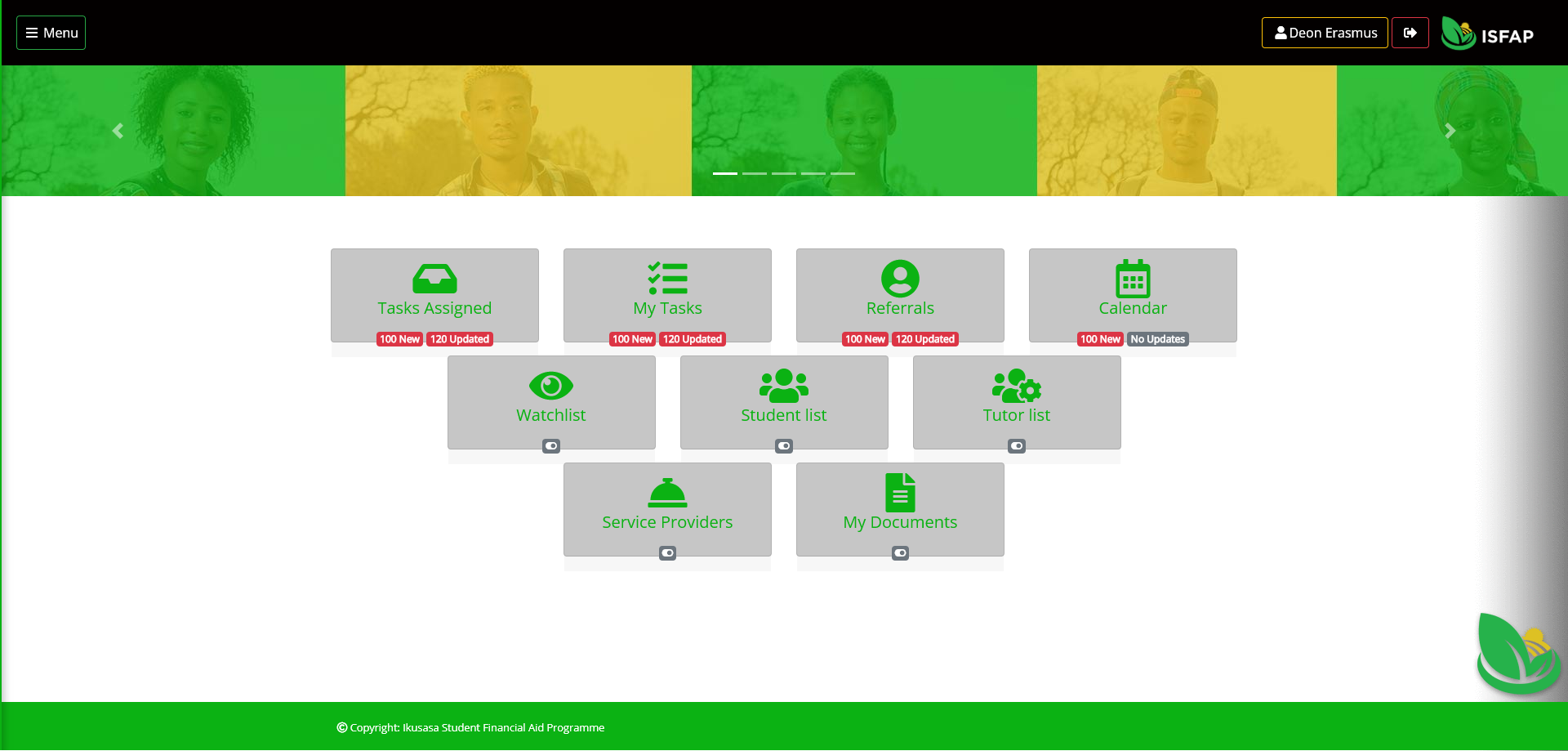
ISFAP required more than a website. The project brought together multiple digital touchpoints serving students, administrators, funders and internal teams.
UX/UI Design
Digital Product Design
Front-end Collaboration
Public Website
Student Portal
Administration Portal
Business Analysis
Development Team
Stakeholders
The challenge was to create a coherent digital experience across very different users, needs and workflows.
Students needed a clear way to manage their academic journey, tasks, documents and support. Administrators needed tools to manage funding, reporting and operational processes, while funders and internal teams required visibility into the wider programme.
Communicating ISFAP's mission, funding opportunities and programme information.
Giving students access to tasks, documents, referrals, academic information and support services.
Supporting funding management, reporting, student administration and operational workflows.
The student portal brought everyday tasks, academic information, documents and support services into one accessible environment.

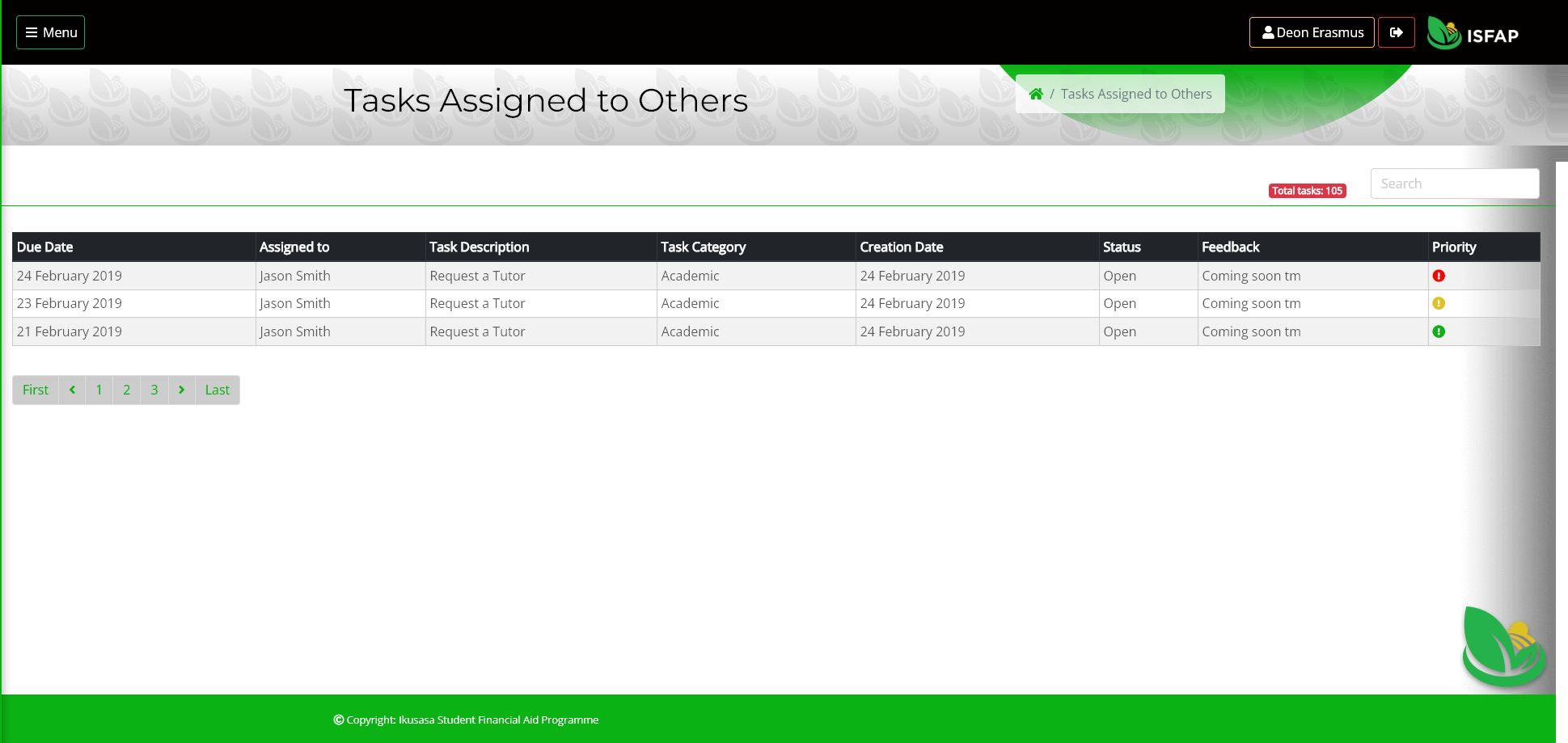
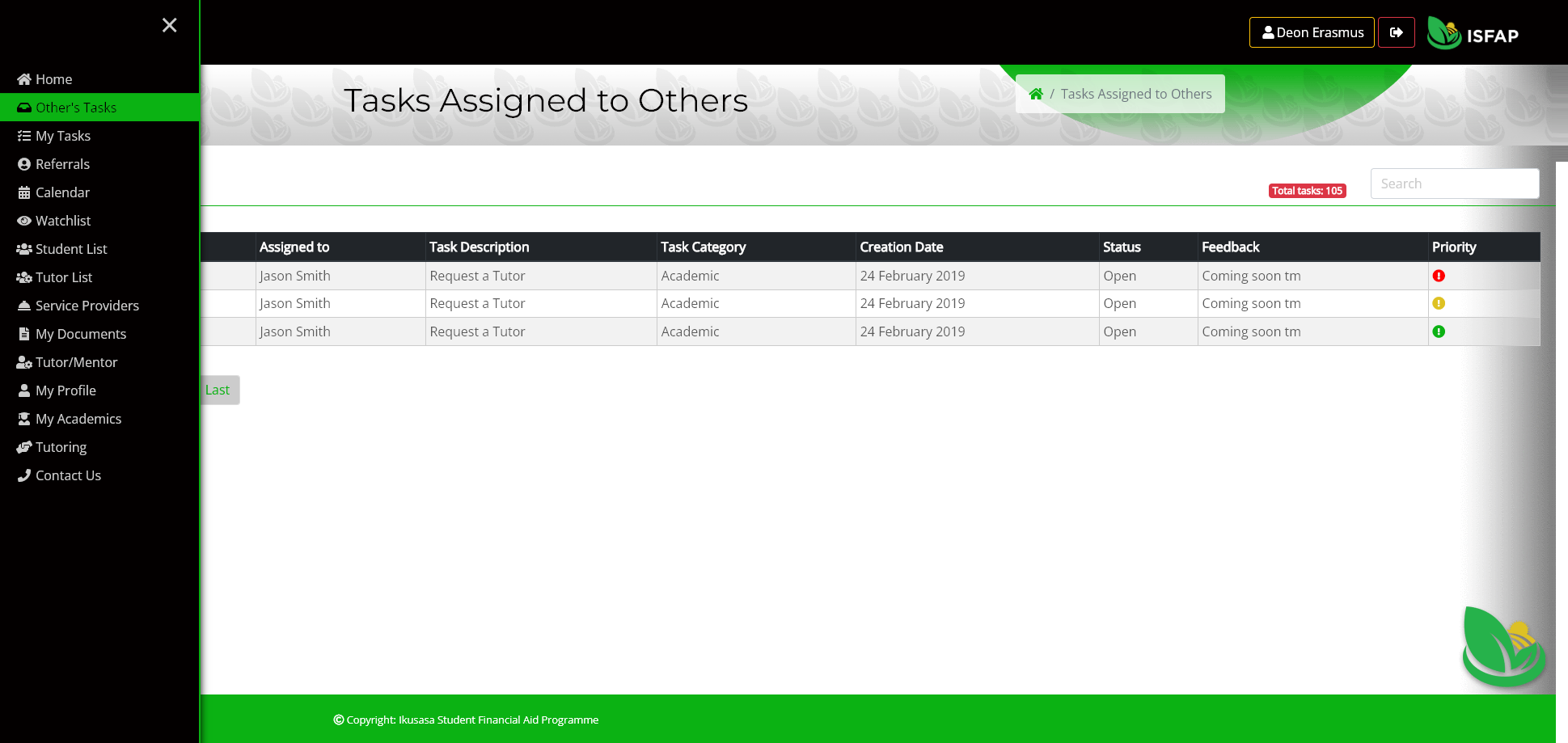
The administration platform brought funding, student management, reporting and operational workflows together within a structured working environment.
The interface needed to provide administrators with clear access to funder management, student allocation, reporting and operational actions without losing sight of the wider system.
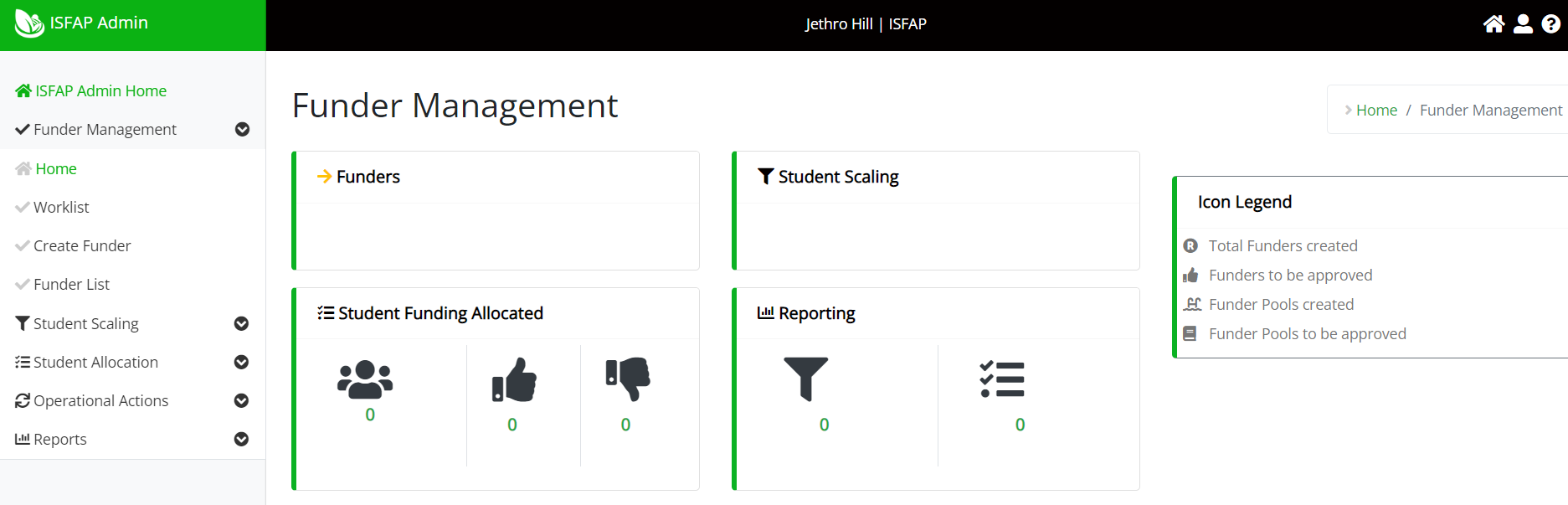
Designing the platform also meant considering what users could access, what they couldn't, and how the experience responded when permissions or circumstances changed.
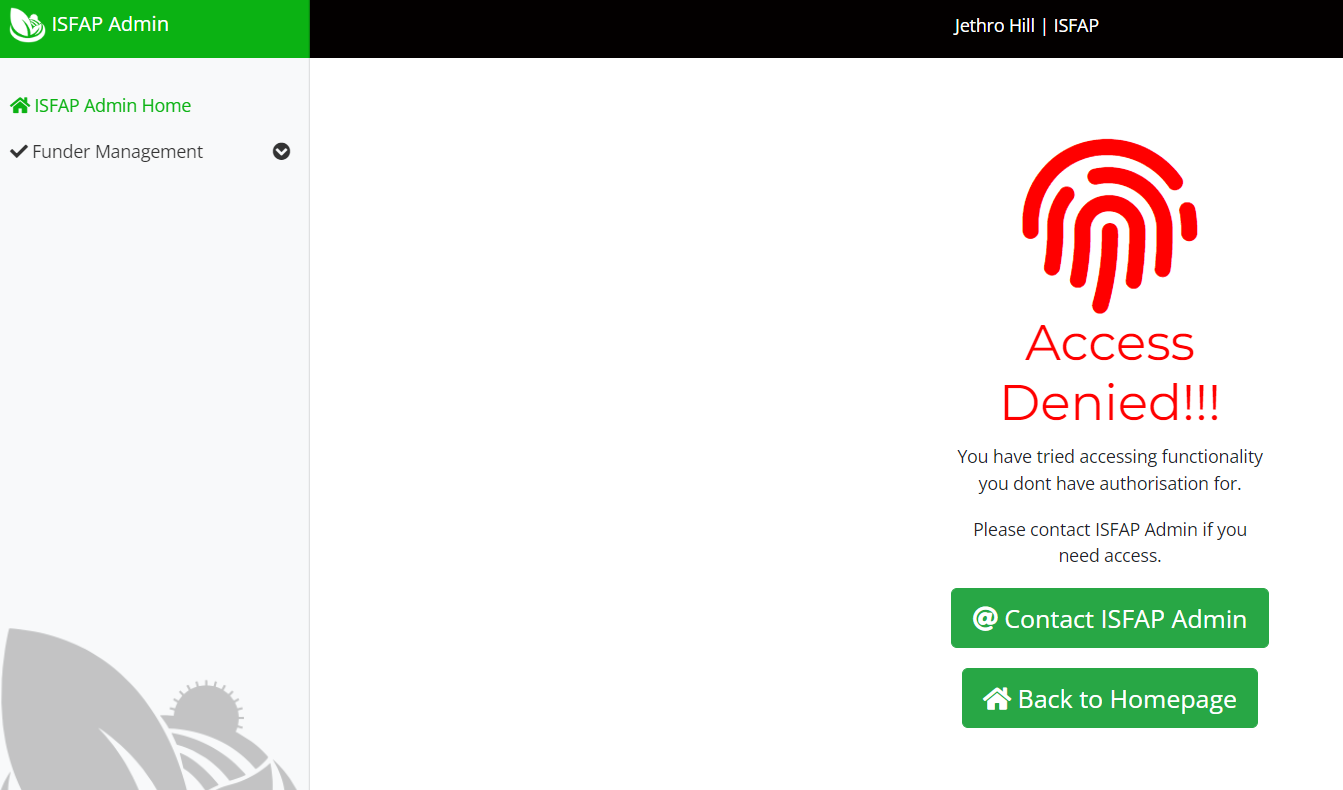
Access & Permissions
Different roles required different levels of access across the administration environment. Permission states needed to be communicated clearly while giving users an obvious route back into the appropriate workflow.
Design considerations
Interface decisions considered usability beyond ideal viewing conditions, including colour-blind accessibility and the need to avoid relying on colour alone to communicate meaning.
Navigation and functionality needed to adapt to different user roles while keeping the overall system understandable and consistent.
Status indicators, task states and operational information helped users understand where they were within complex administrative processes.
My role connected UX/UI design with business requirements and technical implementation, working closely with business analysis, stakeholders and the development team.
Translate business requirements and stakeholder needs into clear user journeys, interface requirements and priorities.
Develop UX and visual interface solutions across the public website, student portal and administration environment.
Work alongside business analysis and an 11-person development team within an Agile delivery process.
Support implementation with production HTML and close collaboration between design and development.
The project brought public-facing communication, student services and administrative workflows into a more cohesive digital experience — designed around the needs of different users while maintaining a consistent system.